Snapmaker U1 Industry Solutions

Desktop laser systems used across manufacturing, prototyping, jewelry, signage, and education. Here is how each sector puts them to work.

Jewelry laser engraving

Jewelry & Accessories

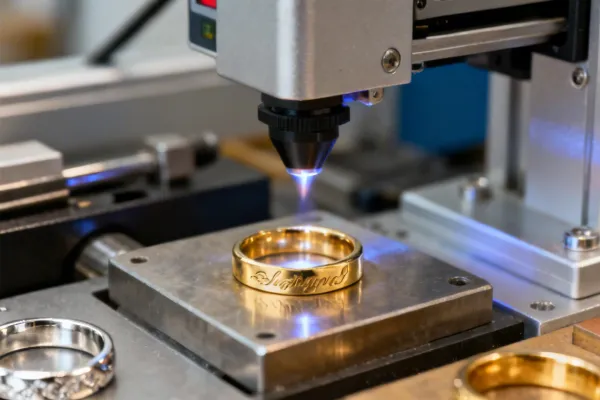
Permanent marking on gold, silver, platinum, and stainless steel. Engraving depths from 0.01mm surface marks to 0.5mm deep cut lettering. Rotary attachment handles rings from 2mm to 150mm diameter. Typical cycle: 3-8 seconds per ring.

Discuss Your Application
Industrial part marking

Industrial Part Marking

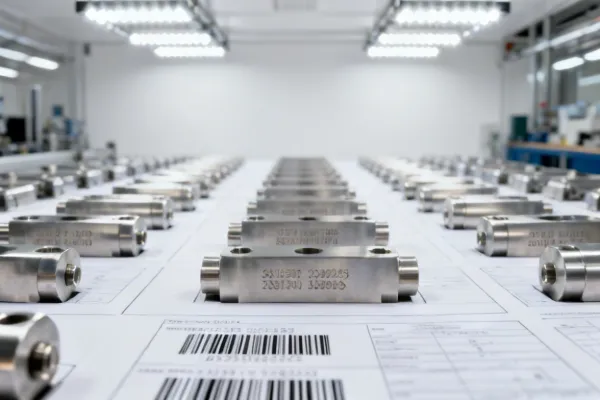
Permanent traceability marking on machined parts, castings, and assemblies. DataMatrix, QR codes, serial numbers, and logos compliant with ISO/IEC 16022 (2D barcode) and AIM DPM-1-2006 (direct part marking) standards. Marking depth of 0.01-0.3mm meets requirements for automotive OEMs (per AIAG B-10) and aerospace MIL-STD-130 identification standards. Integration with Cognex and Keyence barcode verification systems available for inline quality checks. Note: deep engraving beyond 0.5mm on hardened tool steel requires multiple passes and may not meet production cycle times for high-volume applications.

Discuss Your Application
Signage and custom products laser cutting

Signage & Custom Products

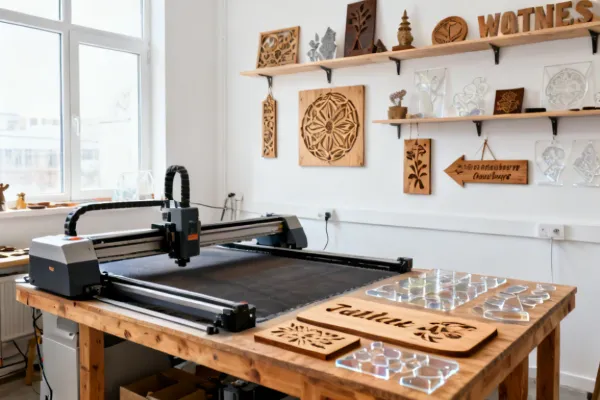
Cut and engrave wood, acrylic, leather, and paper for signs, awards, packaging inserts, and personalized gifts. Diode laser modules handle materials up to 20mm thick depending on substrate. Batch production with automated job queuing.

Discuss Your Application
Education and prototyping with laser

Education & Prototyping

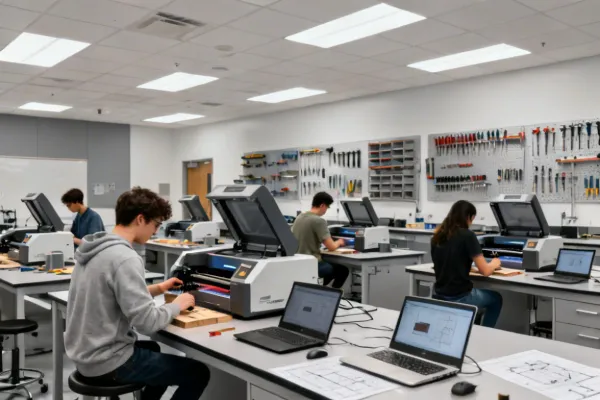
Compact enclosed systems safe for classroom and lab environments. Class 1 laser safety rating when operated with enclosure. Pre-loaded material database simplifies student operation. Used in engineering programs, makerspaces, and R&D departments for rapid iteration.

Discuss Your Application
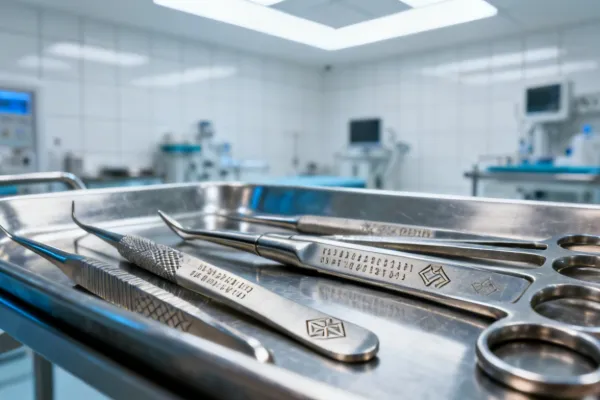
Medical device laser marking

Medical & Dental Instruments

UDI-compliant marking per FDA 21 CFR 801.20 on surgical instruments, implants, and dental tools. Marks survive 1,000+ autoclave cycles at 134C without degradation. Fiber laser annealing at controlled pulse frequencies (20-80kHz) produces sub-surface oxide marks on stainless steel without removing material or compromising passivation layers per ASTM A967. Limitation: titanium implants require specific pulse parameters to avoid discoloration outside acceptable medical-grade color bands -- consult our application engineers for validated parameters.

Discuss Your Application
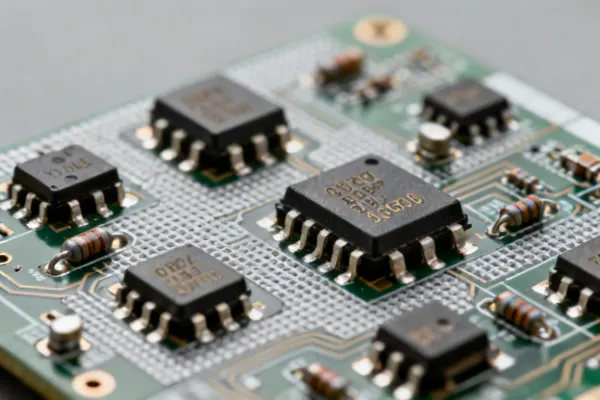
Electronics laser marking

Electronics & PCB

Fine-detail marking on PCBs, connectors, housings, and heat sinks. Line widths down to 0.02mm. Non-contact process prevents mechanical stress on sensitive components. Compatible with automated vision alignment for high-volume marking.

Discuss Your Application

Fiber Laser vs Diode Laser: Which One Fits Your Work?

Desktop laser buyers frequently debate whether a fiber or diode system is the right investment. The answer depends on material type, throughput requirements, and budget. Neither technology is universally superior -- each has clear strengths and trade-offs.

Parameter Fiber Laser (20W-60W) Diode Laser (10W-40W)
Wavelength 1064nm (near-infrared) 445-455nm (blue) or 808nm (infrared)
Primary Materials Metals, alloys, some ceramics Wood, acrylic, leather, fabric, paper
Marking Speed Up to 10,000mm/s (galvo scanning) Up to 600mm/s (gantry motion)
Positioning Accuracy +/-0.01mm +/-0.05mm typical
Source Lifespan 100,000+ hours (JPT / Raycus sources) 10,000-20,000 hours (diode module)
Work Area 110x110mm standard, 200x200mm extended 400x400mm to 600x900mm
Entry Price Range $3,500-$12,000 depending on power and configuration $1,200-$5,000 depending on power and bed size
Limitations Cannot cut organic materials; small work area; higher cost Cannot mark bare metals; slower; shorter source life

Honest Trade-offs to Consider

When Fiber Makes Sense

If your primary work involves metal marking, traceability codes, or jewelry engraving, fiber delivers the speed and permanence you need. However, the smaller work area (110-200mm) and higher entry cost ($3,500+) mean fiber is not cost-effective for large-format organic material work. Fiber lasers also cannot cut through metals at desktop power levels -- they mark the surface, not slice through it.

When Diode Makes Sense

If you primarily cut wood, acrylic, or leather, diode systems offer larger beds and lower entry costs. The trade-off is slower processing speed, reduced positioning precision compared to galvo-based fiber systems, and shorter source lifespan (10,000-20,000 hours vs 100,000+ for fiber). Diode modules also struggle with materials thicker than 15-20mm and cannot achieve the sub-0.02mm line widths that fiber delivers on metals.

What About CO2 Lasers?

CO2 lasers (10.6μm wavelength, typically 40W-150W) remain the dominant choice for high-throughput cutting of thick organic materials -- particularly acrylic over 10mm and wood over 15mm. Desktop CO2 systems from established brands like Epilog, Trotec, and Full Spectrum generally cost $4,000-$15,000+ and offer faster cutting on thick substrates than diode alternatives. However, CO2 lasers require mirror alignment maintenance, have higher operating costs (tube replacement every 2,000-8,000 hours), and cannot mark metals without specialized coatings. Snapmaker U1 does not currently offer a CO2 module. If your application demands thick-material cutting at high speed, a CO2 system may be more appropriate. Our application engineers can help assess whether a diode, fiber, or CO2 approach best matches your production requirements.

Free Material Testing Program

Not sure how your specific material will respond? We offer complimentary test processing on actual production samples.

1

Send Samples

Ship 3-5 pieces of your target material to our Santa Clara applications lab. Include your desired output: marking depth, cut-through, surface finish, or engraving detail.

2

We Test and Document

Our application engineers run samples on both fiber and diode modules at multiple power levels and speeds. We document parameters used, measure results with digital calipers and optical microscopes, and photograph outcomes at 20x magnification.

3

Receive Results Report

Within 5 business days, you receive a PDF report with: tested parameters (power, speed, frequency, focus offset), measured results (depth, width, surface roughness), high-resolution photos of processed samples, and a recommended machine configuration with pricing.

Not sure which system fits your application?

Send us sample materials or drawings. We will run test cuts and recommend the right configuration.

Get a Recommendation